Description
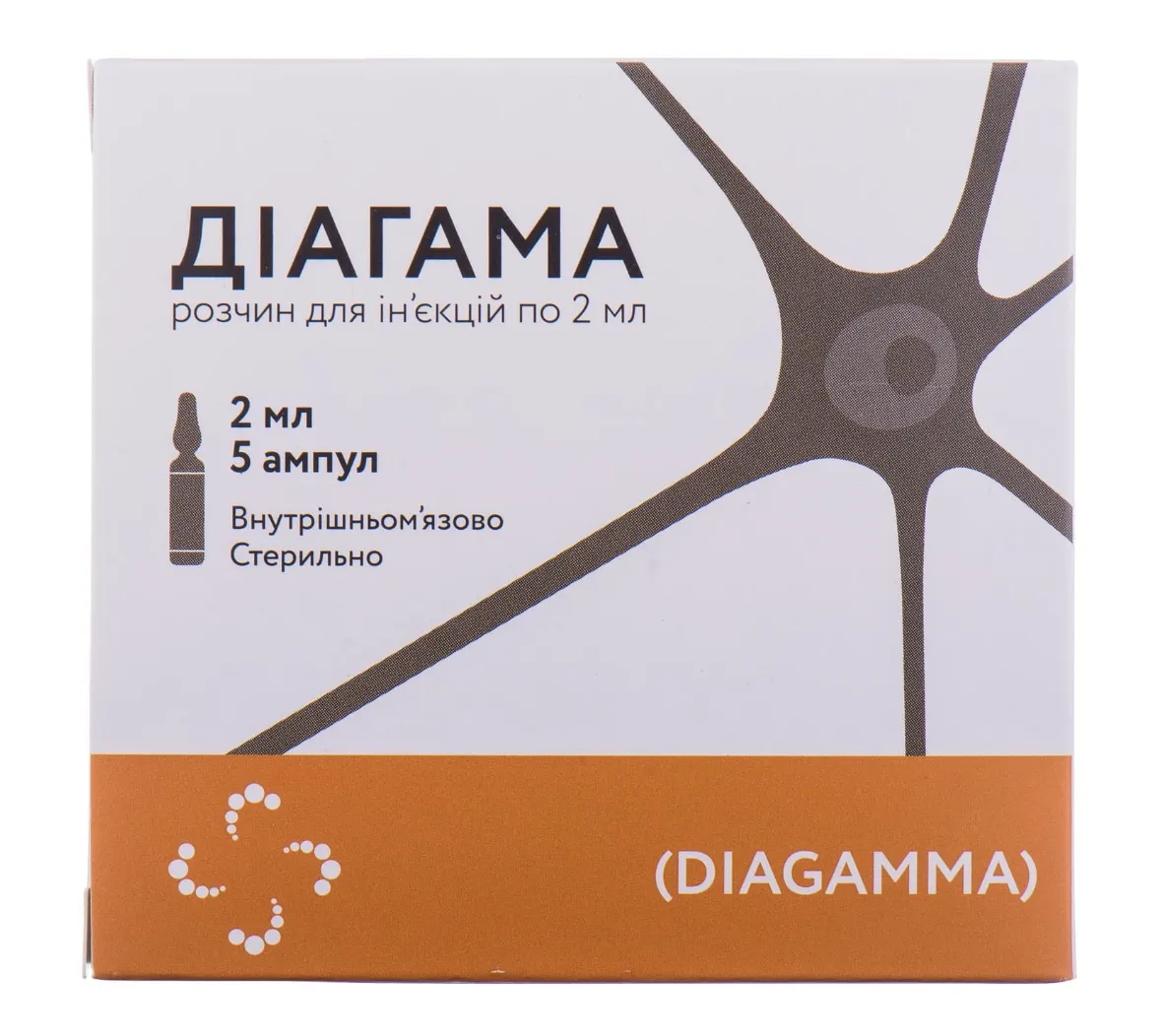
Diagama (Thiamine Hydrochloride) Solution for Injections Amp. 2 ml. №5
Composition
Each 2 ml ampoule contains thiamine hydrochloride.
Mechanism of Action
Thiamine hydrochloride, the active ingredient in Diagama, plays a crucial role in energy metabolism and nerve function.
Pharmacological Properties
Thiamine is an essential nutrient that acts as a coenzyme in carbohydrate metabolism and neurotransmitter synthesis.
Indications for Use
Diagama is indicated for the treatment of thiamine deficiency, Wernicke’s encephalopathy, and other conditions requiring thiamine supplementation.
Contraindications
Do not use Diagama in patients with known hypersensitivity to thiamine or any other component of the formulation.
Side Effects
Diagama is generally well-tolerated; however, rare allergic reactions may occur in sensitive individuals.
Usage Instructions
Administer Diagama by deep intramuscular or intravenous injection. Dosage and duration of therapy should be individualized based on the patient’s condition.
Benefits Compared to Analogues
Diagama offers a reliable and effective solution for thiamine deficiency-related disorders, ensuring prompt correction of deficiencies and improved patient outcomes.
Suitable Patient Groups
Diagama is suitable for adults and elderly patients requiring thiamine supplementation. It should be used with caution in pediatric populations.
Storage and Shelf Life
Store Diagama in a cool, dry place away from direct sunlight. Check the expiration date on the packaging and do not use if expired.
Packaging Description
Diagama is available in boxes containing 5 ampoules of 2 ml each, ensuring convenient and accurate dosing.
Clinical Evidence and Proven Effectiveness
Thiamine supplementation with products like Diagama has been extensively studied and shown to effectively reverse thiamine deficiencies, preventing severe neurological complications and improving patient prognosis.