Description
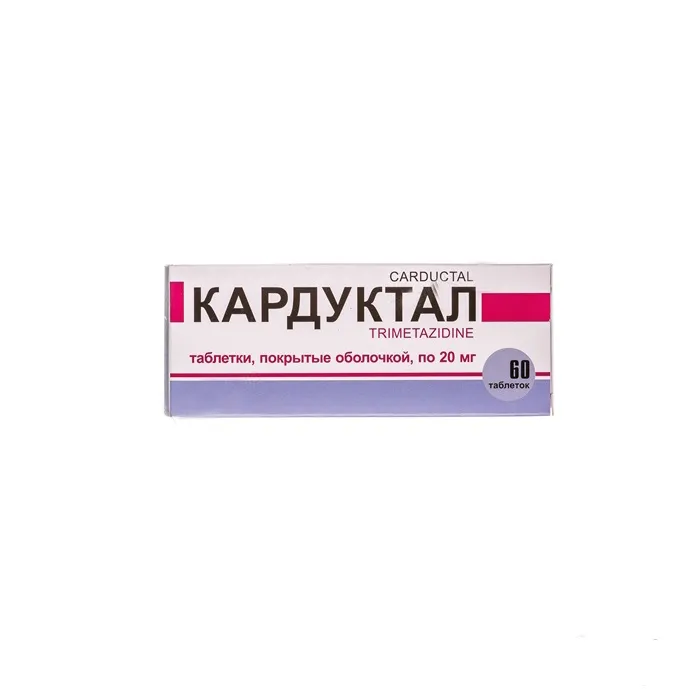
Carductal (Trimetazidine) Tablets 20 mg. №60
Composition
The active ingredient in Carductal tablets is trimetazidine. Each tablet contains 20 mg of trimetazidine.
Mechanism of Action
Trimetazidine acts by shifting myocardial metabolism from fatty acid oxidation to glucose oxidation, thereby preserving energy metabolism in cardiac cells under ischemic conditions.
Pharmacological Properties
Trimetazidine is a selective metabolic agent that exerts anti-ischemic effects by improving myocardial glucose utilization and maintaining cellular ionic balance.
Indications for Use
Carductal is indicated for the treatment of angina pectoris, vertigo, Meniere’s disease, and tinnitus. It is recommended as an adjunct therapy for Meniere’s disease and tinnitus.
Contraindications
Carductal is contraindicated in patients with hypersensitivity to trimetazidine or any other ingredient in the formulation. It should not be used in patients with severe renal impairment or Parkinson’s disease due to potential risks.
Side Effects
Common side effects of Carductal may include nausea, vomiting, gastrointestinal disturbances, headache, and dizziness. In rare cases, allergic reactions or extrapyramidal symptoms may occur.
Usage Instructions
The recommended dosage of Carductal is one tablet taken twice daily, in the morning and evening. The tablets should be swallowed whole with a glass of water for optimal efficacy.
Benefits Compared to Analogues
Carductal offers the advantage of improved myocardial energy metabolism without negatively impacting cardiac function. Compared to other anti-anginal agents, Carductal has a unique mechanism of action that targets metabolic pathways.
Suitable Patient Groups
Carductal is suitable for adult patients with angina pectoris, vertigo, Meniere’s disease, or tinnitus. It is not recommended for use in children, pregnant women, or elderly patients with severe renal dysfunction without medical supervision.
Storage and Shelf Life
Store Carductal tablets in a cool, dry place away from direct sunlight. The shelf life of the product is mentioned on the packaging and should be strictly adhered to for optimal efficacy.
Packaging Description
Carductal tablets are packaged in blister packs of 60 tablets each. The packaging is designed to protect the tablets from moisture and external factors that may affect their stability.